Showing posts with label PM NAREDRA MODI. Show all posts

Monday, 21 December 2015

Family and Personal Background of Narendra Modi

Narendra Damodardas Modi hails from a family of grocers in a town called Vadnagar in the northern Mehsana district of the state of Gujarat. He was born on 17 September 1950 to Damodardas Mulchand Modi and Heeraben Modi. Narendra Modi is the third eldest of his six siblings.

Modi completed his studies against all odds. His saga of struggle began when as a teenager, he, along with his brother, used to run a tea stall near a railway station in Ahmedabad. He did his schooling from Vadnagar and obtained a master's degree in Political Science from the Gujarat University. One of his school teachers described him as an average student but a brilliant debater. During his college days, he acted as a pracharak (promoter) of the Rashtriya Swayamsevak Sangh (RSS).

At a later stage, during the 1990s when Modi served in New Delhi as the official spokesperson of the BJP, he completed a three-month long course in the US on public relations and image management.

One of his brothers, Somabhai, is a retired health officer who now runs an old age home in the city of Ahmedabad. Another of his brothers Prahlad, an activist on behalf of fair-price shop owners, has his own fair-price shop in Ahmedabad. His third brother Pankaj is employed with the Information Department in Gandhinagar.

Important Facts about Narendra Modi

Modi is the first Prime Minister of India who was born in 'Independent India’, that is, post-August 15, 1947. He is also the first Indian prime minister whose mother was alive when he took office. He holds the record of winning a Lok Sabha seat by the highest margin (about 5.70 lakhs; Vadodara).

Modi's Make in India Campaign

‘Make in India’, launched on 25 September 2014 by the Indian Prime Minister Narendra Modi, is a Government of India project to attract, encourage and invite the oversees companies to manufacture their products in factories and plants located in India. This initiative of PM Modi is aimed at creating generating employment opportunities for the youth of Indian youth and accelerating economic growth by strengthening Indian manufacturing sector. For PM Modi, Make in India is not just about ‘FDI’ in sense of ‘Foreign Direct Investment’ but it also means ‘First Develop India’.

Before the 2014 General Elections, Prime Minister of India Narendra Modi had promised bringing foreign investment into India to create more job opportunities for the skilled and qualified Indian youth of India. Modi announced an this innovative programme called 'Make in India' in his first Independence Day speech as the Indian Prime Minister on 15 August 2014 at the Red Fort. The initiative is targeted at 25 of the most crucial sectors of the Indian economy including renewable energy, electronics, bio-technology, mining, design manufacturing, automobiles, auto components, chemicals, railways, IT, hospitality, pharmaceuticals, tourism, aviation and textiles.

For the initiative, the Indian government relaxed the norms for Foreign Direct Investment (FDI) in defence sector, raising the limit from 26 percent to 49 percent, while. In addition to that, FDI was now allowed in railways as well by the government had also allowed FDI in railways in August 2014, with the limit of and that too whopping 100 percent.
WBVK WBVDA

Political Career of Narendra Modi

Narendra Modi always had the utmost zeal and enthusiasm to serve and help the people in need. As a young boy during the Indo-Pak war in 1965, Narendra Modi voluntarily offered his services to the soldiers at the railway stations. He also served the affected people during the 1967 Gujarat floods. Modi started working in the Gujarat State Road Transport Corporation’s staff canteen. Eventually from there he became a full-time proponent and campaigner, commonly called a pracharak of the RSS. Modi later underwent training in the RSS camp in Nagpur. It is a prerequisite for any RSS member to take up the training course for holding any official position in the Sangh Parivar. Narendra Modi was given charge of the student wing, which is better known as Akhil Bharatiya Vidyarthi Parishad (ABVP). 

Inside the page
Narendra Modi Elections resultRead Latest Articles About Narendra Modi
Blogs about Narendra ModiLatest News
Books on Narendra ModiBooks written by Narendra Modi
Official tours of Narendra Modi and their benefits for India100 days of Modi Government
You may also like to read
Know about Atal Bihari Vajpayee
Biography of Lal Krishna Advani
Political Journey of Murli Manohar joshi

Narendra Modi Elections result

YearConstituencyStateStatus
2014VaranasiUttar PradeshWon
2014VadodaraGujaratWon
Narendra Modi was an efficient organiser from a very young age. During the Emergency, he arranged for covert circulation of pamphlets featuring RSS' views and also organised protests against the rule. During his RSS days he met the two Jan Sangh leaders Vasant Gajendragadkar and Nathalal Jaghda who later founded the state unit of BJP in Gujarat. Later in the year 1987, the RSS deputed Narendra Modi to politics by recommending his candidature in the BJP. Modi’s efficiency was acknowledged and he rose to prominence after organising the Ekta Yatra for Murli Manohar Joshi. - See more at: http://www.elections.in/political-leaders/narendra-modi.html#sthash.UB3zfF4Q.dpuf

Narendra Modi breaks his silence on 2002 Gujarat riots

New Delhi: Gujarat chief minister Narendra Modi, the prime ministerial candidate of the Bharatiya Janata Party (BJP), broke nearly 12 years of silence on Friday by expressing his anguish over the riots that engulfed the state in 2002.
One day after a Gujarat lower court cleared him of a complicit role in the riots that left some 1,000 people dead, Modi wrote on his official blog that “the mindless violence of 2002” had left him “shaken to the core”.
Some analysts said the statement, which came as a surprise, could be an attempt by Modi to seek closure over the riots, with which his alleged association continues to be a political liability.
It could potentially also make it easier for the prime ministerial aspirant to reach out to sceptics—individuals as well as political parties.
“Grief, sadness, misery, pain, anguish, agony—mere words could not capture the absolute emptiness one felt on witnessing such inhumanity,” Modi wrote.
“In decisively confronting this great turmoil, I had to single-mindedly focus all the strength given to me by the almighty, on the task of peace, justice and rehabilitation; burying the pain and agony I was personally wracked with.”
On Thursday, an Ahmedabad metropolitan court upheld the clean chit given to Modi by a Supreme Court-appointed special investigating team (SIT) in a case related to the riots, saying there was no “prosecutable evidence” to initiate a case against Modi and others. The court ruled on a writ petition that wanted the report to be set aside.
Modi and his state government have been accused of not doing enough to contain the riots that broke out in Gujarat after a mob torched a train coach carrying mainly Hindu pilgrims on 27 February 2002 in the town of Godhra.
“I have only one earnest prayer to God. That never again should such cruelly unfortunate days come in the lives of any other person, society, state or nation,” Modi wrote in a blog titled “Satyameva Jayate: Truth Alone Triumphs”. He added that he had to go through “inner turmoil and shock of being blamed” for the death and misery of those affected in the riots.
Congress vice-president Rahul Gandhi, who held a press conference at his party headquarters on Friday to brief the media about his meeting with Congress chief ministers, dodged a question on his reaction to Modi’s blog post.
Within the Congress there is pressure, especially from among the younger leaders, to declare Gandhi as the party’s prime ministerial candidate and turn the 2014 general election into a Gandhi vs. Modi face-off.
“The reason that he (Modi) has gone public on this is that he realizes that as he is coming on the national scene, he has to make certain statements,” said Sandeep Shastri, a political analyst and pro vice-chancellor of Bangalore-based Jain University.
“He has gone to the extent to which his self-constructed image allows him to go. He has not apologized but only expressed regret,” Shastri added.
The BJP bested the Congress in recent state assembly elections, wresting back Rajasthan, emerging as the single largest bloc in the Delhi assembly, and retaining power in Madhya Pradesh and Chhattisgarh.
Modi spearheaded the party’s campaign in the four states.
Experts said Modi’s blog post may enhance the BJP’s prospects of finding alliance partners and help refurbish his image abroad.
“Most of those who have aligned with the BJP have already made up their mind, like the Telugu Desam Party, and this could bolster their arguments,” said Jai Mrug, a Mumbai-based political analyst. “The use of emotive words and adjectives is to build Modi’s stature as a statesman and it is more important keeping in mind the international audience.”
Modi also addressed a section of his critics in his blog post.
“What pained even more was that in their overzealousness to hit at me for their narrow personal and political ends, they ended up maligning my entire state and country. This heartlessly kept reopening the wounds that we were sincerely trying to heal,” he said.
Experts noted the timing of the emotional blog post just a few months before the general election.
“Moving to a national stage, Modi cannot be silent on such an issue,” Shastri said. “He is hoping for closure on the issue, but in politics, there is never closure. His opponents will rake it up whenever it is needed.”

Thursday, 10 December 2015

A few thoughts on completing a month in office

Today the government completes a month in office. The support and affection of the people has been overwhelming and this inspires us to work even harder.
67  years of previous governments is nothing compared to 1 month, but I do want to say that in the last month, our entire team has devoted every single moment for the welfare of the people. Every decision we took has been guided solely by national interest.
When we took over a month ago, I kept thinking that I am new to this place and some people believed that I would take at least a year or even two to learn the intricacies of the working of the Central Government. Fortunately, a month later that thought does not exist any longer in my mind. My confidence and determination has increased tremendously and I credit a substantial part of this to the collective experience and wisdom of my ministerial colleagues and also to my experiences as a four time Chief Minister. The affection of the people and support from officials has also added to this confidence in large measure.
Over the past few days I have been meeting Ministers and Officials from various departments who have been making detailed presentations to me. I must share that these presentations have enabled a wonderful exchange of thoughts and ideas and we have come up with excellent roadmaps for the various ministries and departments.
CMs of several states have met me in the past month. They have extended their good wishes and talked about issues concerning their state. I look forward to working closely with them in the times to come.
I feel there are areas where surely we need to improve. A big challenge I am facing in Delhi is to convey to a select group of people about our intentions and sincerity to bring a positive change in this country. These are people who are both within and outside the government system. There have been some instances in the last month with which our Government had nothing to do yet these controversies have persisted. I don’t blame anybody but I surely feel that we need to strengthen systems whereby the right things are communicated to the right people at the right time. Hopefully things will change then.
Every new government has something that friends in the media like to call a ‘honeymoon period.’ Previous governments had the luxury of extending this ‘honeymoon period’ up to a hundred days and even beyond. Not unexpectedly I don’t have any such luxury. Forget hundred days, the series of allegations began in less than a hundred hours. But when one is working with the sole aim of serving the nation determinately, these things do not matter. That is why I keep working and that is most satisfying.
26th of June is an important date for me. It marks the completion of one month of our journey to fulfil the aspirations of the people. This day is also another landmark day, when in 1975 I witnessed an important phase that taught me the significance of a vibrant democracy.  26th June was the day when the Emergency started, having been imposed an evening earlier. As a youngster, I have several memories of those testing times.
The Emergency surely stands out as one of the darkest periods in our history and is a grim reminder of the dangers associated with subverting freedom of speech, press, expression and silencing opposition. Our democracy will not sustain if we can’t guarantee freedom of speech and expression. Today is also a day to reaffirm our pledge to safeguard these values and at the same time create strong institutions through good governance so that that we never ever see those dark days again.
Once again I salute the people of India for their strong support and good wishes as we complete a month in office. I assure you that we are committed to taking India to greater heights in the years to come.

Thursday, 3 December 2015

Innovation is vital for combating climate change & ensuring climate justice: PM at Mission Innovation event hosted by the US President

President Hollande, President Obama, Excellencies, Mr. Bill Gates, Distinguished Guests, 
Let me begin by saluting President Hollande and the people of France for their courage and resolve; and, to the world for coming together for Paris and France. 

The outstanding arrangements reflect the character of this great nation. The world has assembled in Paris to change the course of our planet to a sustainable path. 

We must speak about goals and targets on carbon emissions and rise in global temperature. But, it is just as important to focus on the instruments that will make it natural and easy for the world to get there.
Innovation is vital for combating climate change & ensuring climate justice: PM at Mission Innovation event hosted by the US President COP-21 Summit, International, Speeches, Mission Innovation, Barack Obama, USA
A vast section of humanity lives at the edge of poverty and in darkness after the sun sets. They need energy to light up their homes and power their future. 

And, they are also the most vulnerable to the consequences of an industrial age powered by fossil fuel. 

Access to energy and a better life is a universal aspiration. And, so are clean environment and healthy habitats. 

As the world's majority works its way to prosperity on a planet left with very limited carbon space , we have to do many things. 

We have to ensure, in the spirit of climate justice, that the life of a few does not crowd out the opportunities for the many still on the initial steps of the development ladder.
Innovation is vital for combating climate change & ensuring climate justice: PM at Mission Innovation event hosted by the US President COP-21 Summit, International, Speeches, Mission Innovation, Barack Obama, USA
The advanced countries must leave enough room for developing countries to grow. And, we must strive for a lighter carbon footprint on our growth path. 

For that we must come together in a partnership to bring clean energy within the reach of all. 

Innovation is vital for combating climate change and ensuring climate justice.
Innovation is vital for combating climate change & ensuring climate justice: PM at Mission Innovation event hosted by the US President COP-21 Summit, International, Speeches, Mission Innovation, Barack Obama, USA
That is what makes this Innovation Summit very special. This unites us behind a common purpose. 

We need research and innovation to make renewable energy much cheaper; more reliable; and, easier to connect to transmission grids. 

We can make conventional energy cleaner. And, we can develop newer sources of renewable energy. 

This is a global responsibility to our collective future. 

Our innovation initiative should be driven by public purpose, not just market incentives, including on intellectual property.
Innovation is vital for combating climate change & ensuring climate justice: PM at Mission Innovation event hosted by the US President COP-21 Summit, International, Speeches, Mission Innovation, Barack Obama, USA
That also means strong public commitment by suppliers to developing countries. 

That will make clean energy technology available, accessible and affordable for all. 

This partnership will combine the responsibility of governments with the innovative capacity of the private sector. We will double our investments in research and innovation; and, deepen collaboration among ourselves. 

We should have an international network of 30-40 universities and labs focusing for next ten years on renewable energy. 

Innovation must be backed by means to make it affordable and ensure adoption.
Innovation is vital for combating climate change & ensuring climate justice: PM at Mission Innovation event hosted by the US President COP-21 Summit, International, Speeches, Mission Innovation, Barack Obama, USA
We have a very successful models of public-private partnership with many countries present here. India is also building renewable capacity in developing countries, including small island states. 

The progress on clean energy technology and costs is impressive. If we raise the level of our efforts, we can transform the world. 

We will also lay the foundation of a new economy in new low carbon age. 

We will restore the balance between ecology and economy, and between our inheritance and obligation to the future. And, live up to Gandhiji's call to care for the world we shall not see. 

Saturday, 28 November 2015

Fulfilling Pandit Deendayal Upadhyaya ji’s dream of a developed and just India

Dear Friends,
Today we bow to Pandit Deendayal Upadhyaya ji, on his birth anniversary. This year the occasion is even more special as it marks the beginning of Deendayal ji’s centenary year.
Pandit Deendayal Upadhyaya is our inspiration. From his life we learn how an individual completely devoted himself to the wellbeing of the nation and the service of the poor. As a political organiser, his work was legendary. Without getting trapped into the lure for power he continued to work, selflessly.
Deendayal ji gave us the Mantra of ‘Integral Humanism’, which has been our guiding principle. This Mantra of ‘Integral Humanism’ stands out as a clear way of thought firmly rooted in the Indian tradition. ‘Integral Humanism also stands out for its emphasis on decentralization and attaches immense importance to the economic progress of every human being.
Fulfilling Pandit Deendayal Upadhyaya ji’s dream of a developed and just India Tributes to leaders, Blog, Make In India, Climate Change, United Nations, Deendayal Upadhyaya
When I say that the Government of India is a government for the poor, it is deeply inspired by Deendayal ji’s idea of Antyodaya or serving the very last person in the society. India’s progress is dependent on how quickly we can free our nation from the clutches of poverty and provide every Indian a life of dignity, opportunity and aspiration.
For years, the poor of India figured prominently in rhetoric of politicians but when it came to delivery on the ground, there was a wide gap. Our government has been laser focused on bridging this gap. All our key initiatives, from Swachh Bharat, to ensuring that the poor have bank accounts, to creating a social security and pension framework to 24/7 electricity and housing for all are aimed at bringing a qualitative difference in the lives of the poor. The scope and scale of these initiatives is wide and unprecedented but we are confident that we will complete them and deliver the desired results.
Exactly on this day last year, the ‘Make in India’ initiative was launched. We believe that India is the ideal destination for companies from across the world to invest in. Our demographic dividend is ideally suited to drive this change and make India a hub for manufacturing, cutting edge research and innovation. With industry will come greater employment and learning opportunities for our youth, which will ignite the lamp of progress and prosperity in their lives.
A year on, I am meeting with top business leaders and investors in the United States, building on the ground we had covered last year. Wherever I am travelling, I have seen renewed enthusiasm towards investing in India. We, on our part are doing everything possible to further this spirit. We have made doing business easier, are working to make our tax structures more predictable, stable and competitive. We are simplifying procedures and removing regulations that are unnecessary. We are placing enormous focus on technology as well.
I am confident these efforts will directly benefit the poor of India and provide them the windows of opportunity they deserve.
Today, I will be addressing a UN Summit on adoption of post-2015 Development Agenda. The world is taking note of the menace of climate change and it must be highlighted that the greatest sufferers of the adverse consequences of climate change will be the poor. It is in a way a manifestation of Antyodaya that today the global community, from leaders to individuals and organisations are coming together to find ways to mitigate this adversity. I am hopeful we will draw up a clear roadmap on Climate Change Mitigation and towards Sustainable Development that will directly benefit the poor and the marginalised.
Pandit Deendayal Upadhyaya always said, ‘Charaiveti, Charaiveti.’ This was an inspiring call to keep pursuing your mission without being overcome by any obstacles, to establish a system of sacrifice and hardwork. Let us follow the path shown by Pandit Deendayal Upadhyaya and work together to fulfil his dream of a developed and just India, where the poorest of the poor is taken care of.

Thursday, 1 October 2015

Google's Flagship Project Loon Impresses PM Modi


WASHINGTON:  Impressed by Google's flagship Project Loon - that takes internet to the remote and inaccessible areas - Prime Minister Narendra Modi believes this has multiple uses like long distance education, rural schools and telemedicine, officials said.

He was given a briefing about Loon during his tour to the Google headquarters in the Silicon Valley over the weekend.

Google officials told PM Modi that they were already doing a pilot project in Andhra Pradesh and the idea is to target rural areas which still do not have internet penetration.

"So, the Prime Minister felt that this could be a very very significant innovation to help us with rural connectivity," Ministry of External Affairs spokesman Vikas Swarup said.
The Google officials said their research tells them that 160 million people can be lifted out of poverty if given internet access.

"So, the Prime Minister immediately felt applications of Project Loon in areas such as long distance education, rural schools and telemedicine etc. And they said that the technology exists to scale up," Mr Swarup said.

"As of now, it simply a means to deliver internet to places where no internet exists, but depending on what the requirements are, this could be scaled up," he added.

In his interaction with Google officials, the Prime Minister talked about his favourite concept called 'JAM' where the 'J' stands for the Jan Dhan Yojana, the 'A' stands for the Aadhaar platform and the 'M' stands for mobile governance.

PM Modi told them that the Jan Dhan Yojana is more or less done, 180 million people who were outside the banking sector have now been covered by bank accounts.

The Aadhaar project is about 90 per cent done. "But mobile governance is where he wanted to move on next and that is where he sought inputs from Google, how that could be made possible," Mr Swarup said.

Specifically, there was a discussion on the possibilities of Google technologies for the agricultural sector in terms of if they could develop algorithm etc. to predict rainfall or to say what is going to happen next in terms of crop patterns etc. which could really be of transformative use in agriculture, he added.

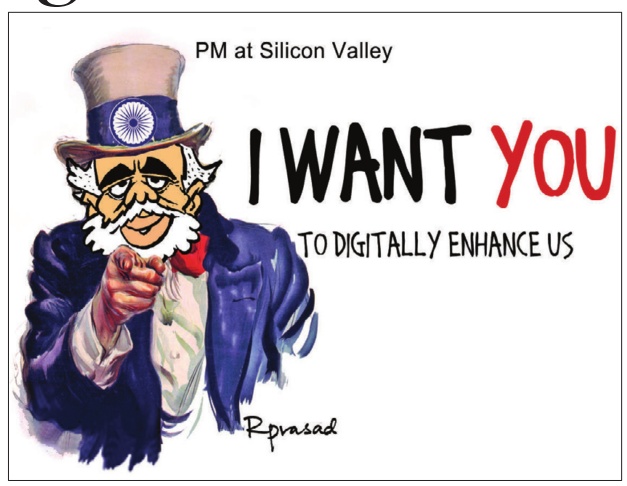
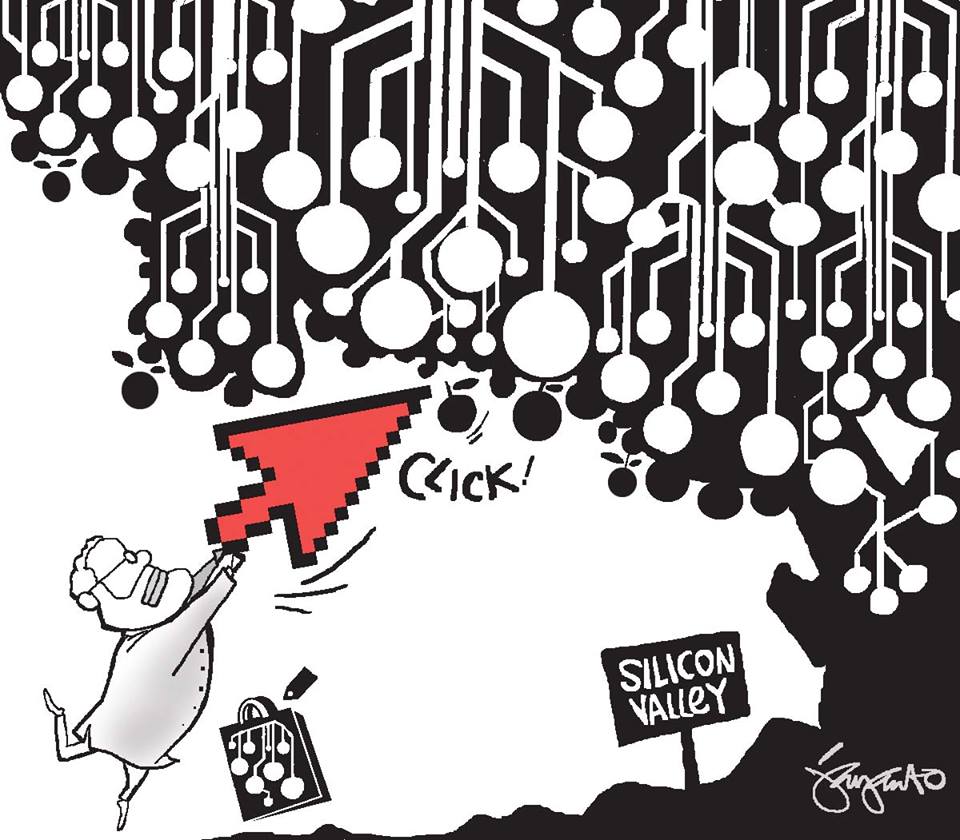
Here's how the cartoonists saw Narendra Modi's US visit

Prime Minister Narendra Modi is currently on the last leg of his six-day-long tour to the United States that has been creating quite a buzz. Apart from taking forward India’s bid for the coveted United Nations Security Council permanent membership, Modi is out wooing tech giants and investors to support his Digital India initiatives. He has already checked out Facebook, Google and Tesla Motors off the list by visiting their respective headquarters and pitching his vision.

Even though the enthusiasm of the press in the US has been somewhat lukewarm this time, the media in India has been giving it saturation coverage, beaming his meetings and speeches live.

While editorials in newspapers are heaping praise on his vision and diplomacy while dissecting the potential outcome of the prime minister's visit, cartoonists have focussed on the concerns back home about internet access, privacy and net neutrality, which the Modi government itself is currently grappling with, and, of course, on noisy controversies such as the one caused by Modi's signature,  on the national flag which resulted in a social media outrage.

Here’s a roundup of some of the cartoons that appeared in major newspapers over the last few days:

The Economic Times  


The Hindustan Times


The Indian Express


The Hindustan Times


The Hindustan Times


Saturday, 12 September 2015

#modi# sunrise India


The Prime Minister, Shri Narendra Modi has congratulated Leander Paes and Martina Hingis, on winning the mixed doubles title at US Open .
"Well played again, Leander Paes and Martina Hingis. Congrats on a great win. We are all very delighted", the Prime Minister said.


Thursday, 10 September 2015

PAHAL-GENERATE NEW ENERGY FOR INDIA

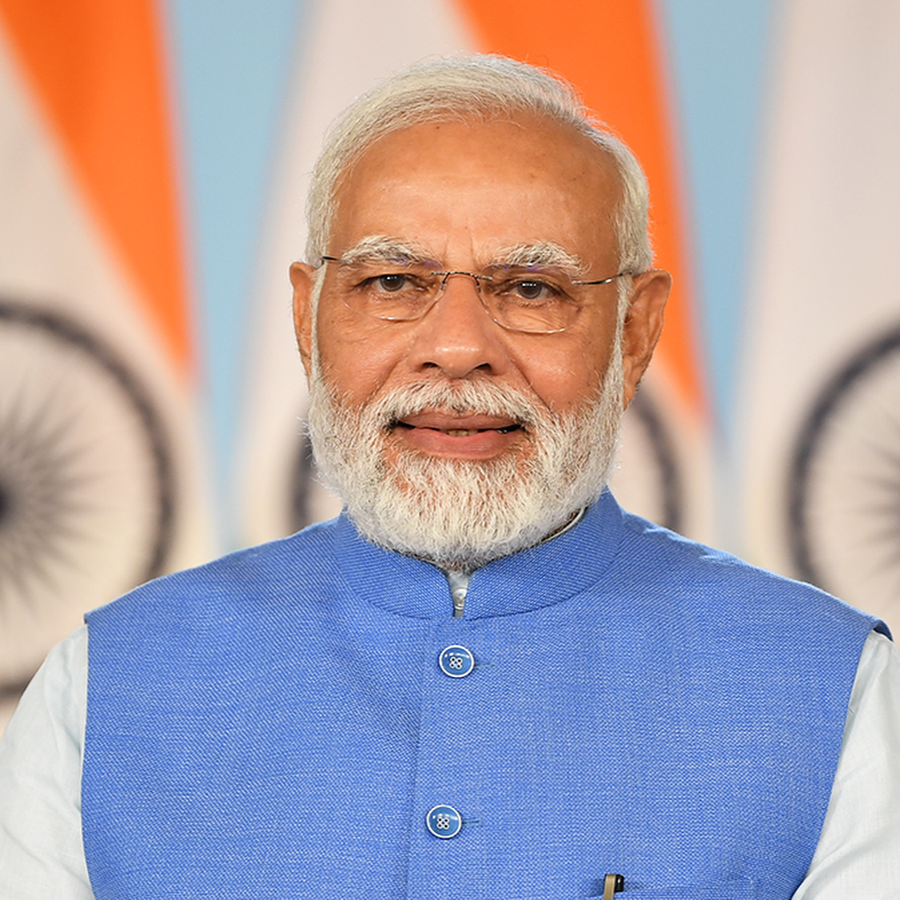
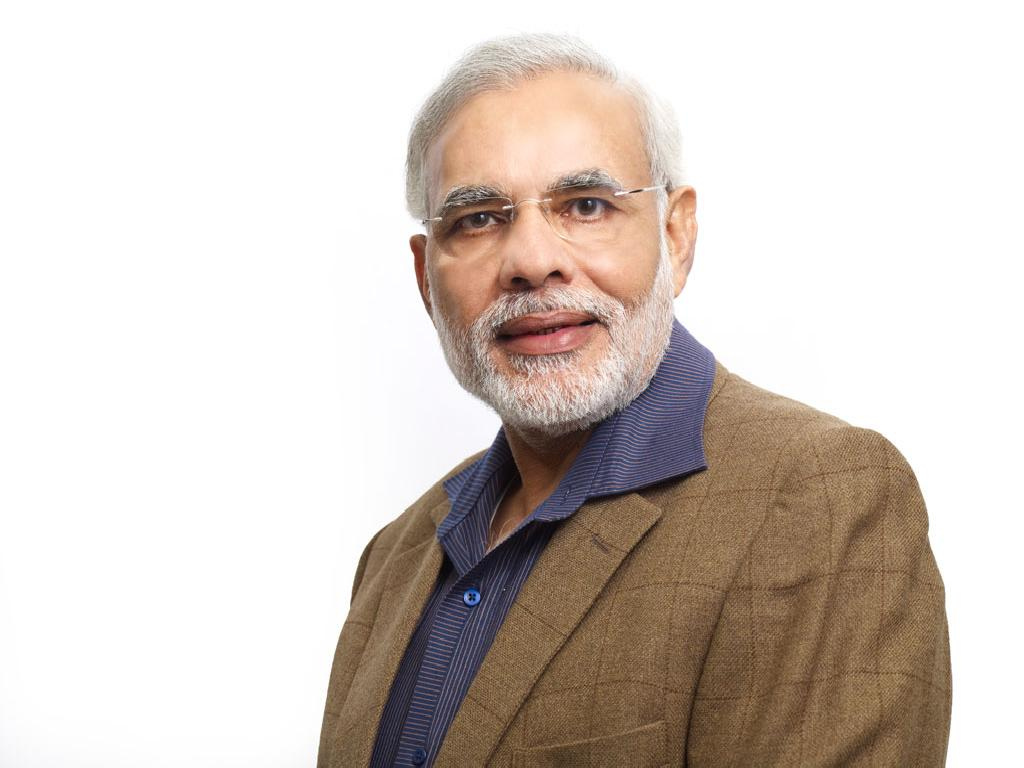
Narendra Damodardas Modi (Gujarati: [nəreːnd̪rə d̪ɑːmoːd̪ərəd̪ɑːs moːd̪iː] ( listen), born 17 September 1950) is the 15th and current Prime Minister of India, in office since 26 May 2014. Modi, a leader of the Bharatiya Janata Party (BJP), was the Chief Minister of Gujarat from 2001 to 2014 and is the Member of Parliament (MP) from Varanasi. He led the BJP in the 2014 general election, which gave the party a majority in the Lok Sabha (the lower house of the Indian parliament) – a first for any party since 1984 – and was credited for October 2014 BJP electoral victories in the states of Haryana and Maharashtra.

The prime minister, a Hindu nationalist and a member of the Rashtriya Swayamsevak Sangh (RSS) is a controversial figure domestically and internationally[ because of criticism that, when he was the Chief Minister of Gujarat, his administration failed to prevent the 2002 Gujarat riots. Modi's economic policies (credited with encouraging economic growth in Gujarat) have been praised, although his administration has also been criticised for failing to significantly improve the human development in the state.